
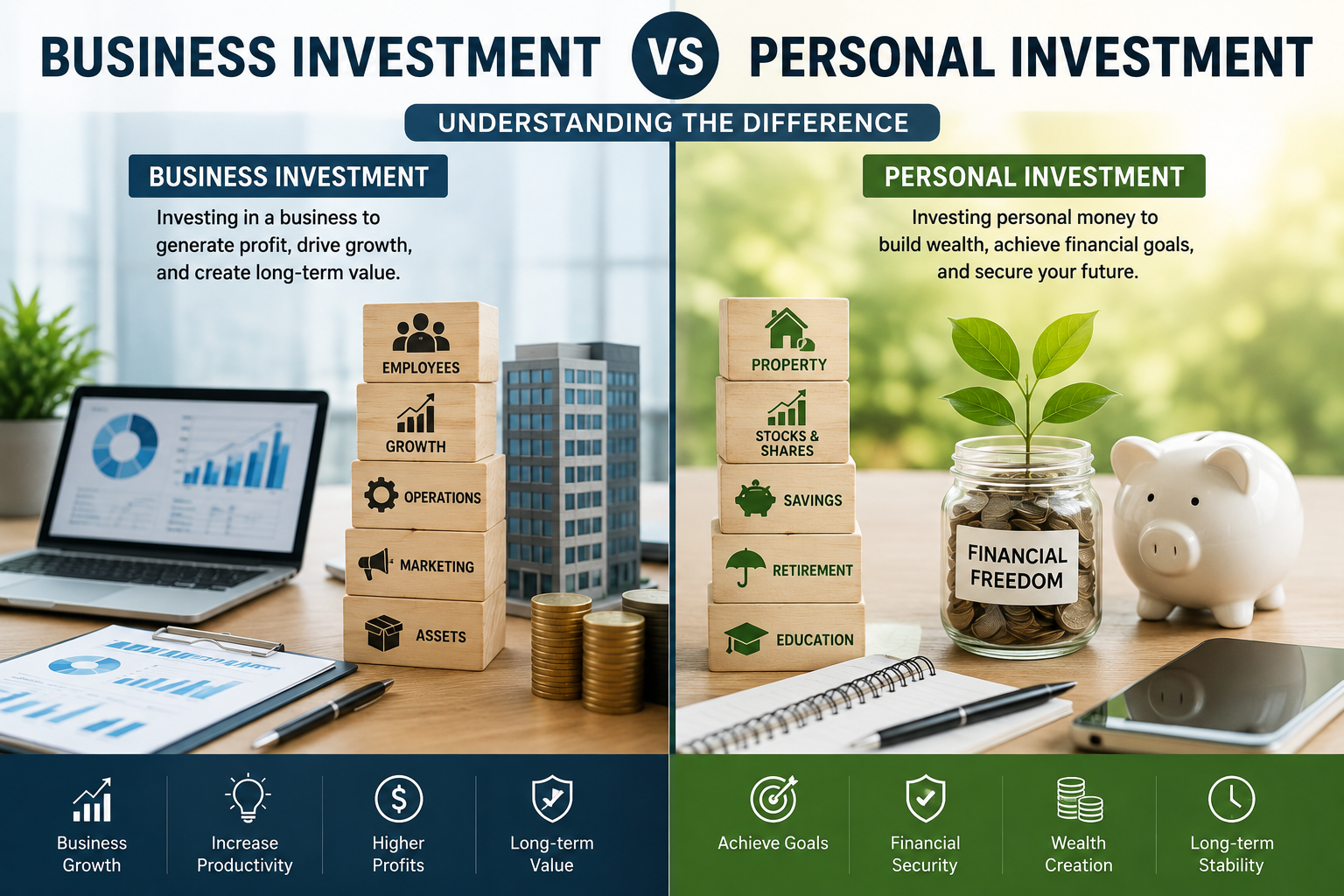
Investment is an important part of building financial stability and creating opportunities for growth. However, business investment and personal investment are not the same. They have different objectives, risks, sources of funds, and expected outcomes.
Understanding the difference can help entrepreneurs make better financial decisions and avoid mixing business finances with personal wealth.
What Is Business Investment?
Business investment refers to putting money or resources into activities that are intended to improve, expand, or generate value for a business.
Examples include:
- Purchasing business equipment
- Expanding into a new location
- Investing in technology
- Hiring and training employees
- Increasing inventory
- Marketing and brand development
- Acquiring business assets
- Developing new products or services
The primary objective is usually to improve business performance, increase revenue, reduce costs, or support long-term growth.
What Is Personal Investment?
Personal investment involves using your personal funds to build wealth or achieve individual financial goals.
Examples include:
- Investing in property
- Purchasing shares or other financial assets
- Building personal savings
- Investing in a retirement plan
- Investing in education or professional development
- Building a diversified personal portfolio
The objective is generally to preserve or grow personal wealth and achieve individual financial goals.
Key Differences Between Business and Personal Investment
1. Different Objectives
Business investments are usually made to support the growth and performance of a company.
Personal investments are generally focused on an individual’s financial security, wealth creation, or future goals.
2. Different Sources of Funds
Business investments may be funded through business profits, retained earnings, business loans, investors, or other forms of business financing.
Personal investments are generally funded with personal income, savings, or personal assets.
3. Different Risk Considerations
Business investments can directly affect the financial performance of a company. For example, investing heavily in expansion without sufficient demand could create financial pressure.
Personal investments also involve risk, but the consequences primarily affect an individual’s personal finances.
Before making either type of investment, it is important to understand the potential risks and expected returns.
4. Different Measures of Success
The success of a business investment may be measured through increased revenue, improved productivity, greater market share, profitability, or business expansion.
For personal investments, success may be measured through portfolio growth, income generation, capital appreciation, or progress toward personal financial goals.
Why Entrepreneurs Should Keep Them Separate
One of the most important financial practices for business owners is keeping business finances separate from personal finances.
Using separate accounts and maintaining accurate financial records can make it easier to:
- Track business performance
- Monitor cash flow
- Prepare financial reports
- Manage expenses
- Evaluate investments
- Maintain financial discipline
- Make informed business decisions
Separating finances can also help an entrepreneur understand whether the business itself is generating sustainable value.
Can a Business Owner Have Both?
Absolutely.
An entrepreneur can invest in their business while also building a personal investment portfolio. In fact, having separate business and personal investment strategies can help create a more balanced approach to financial planning.
The key is to understand the purpose of each investment and ensure that funds are allocated appropriately.
How to Decide Where to Invest
Before committing money, consider the following questions:
- What is my investment objective?
- Is this investment for my business or personal financial goals?
- What level of risk can I afford?
- How much capital can I commit without creating financial pressure?
- What return do I realistically expect?
- How long do I plan to keep the investment?
- Do I need professional financial, business, or legal advice?
Answering these questions can help you make more informed decisions.
Conclusion
Business investment and personal investment can both contribute to long-term financial success, but they serve different purposes. Business investment focuses on strengthening and growing a company, while personal investment focuses on building individual wealth and financial security.
For entrepreneurs, keeping the two strategies clearly separated can improve financial management and make it easier to measure progress.
At Silverstone Multinational Limited, we believe that informed planning and strategic decision-making are essential for sustainable business and investment growth.