
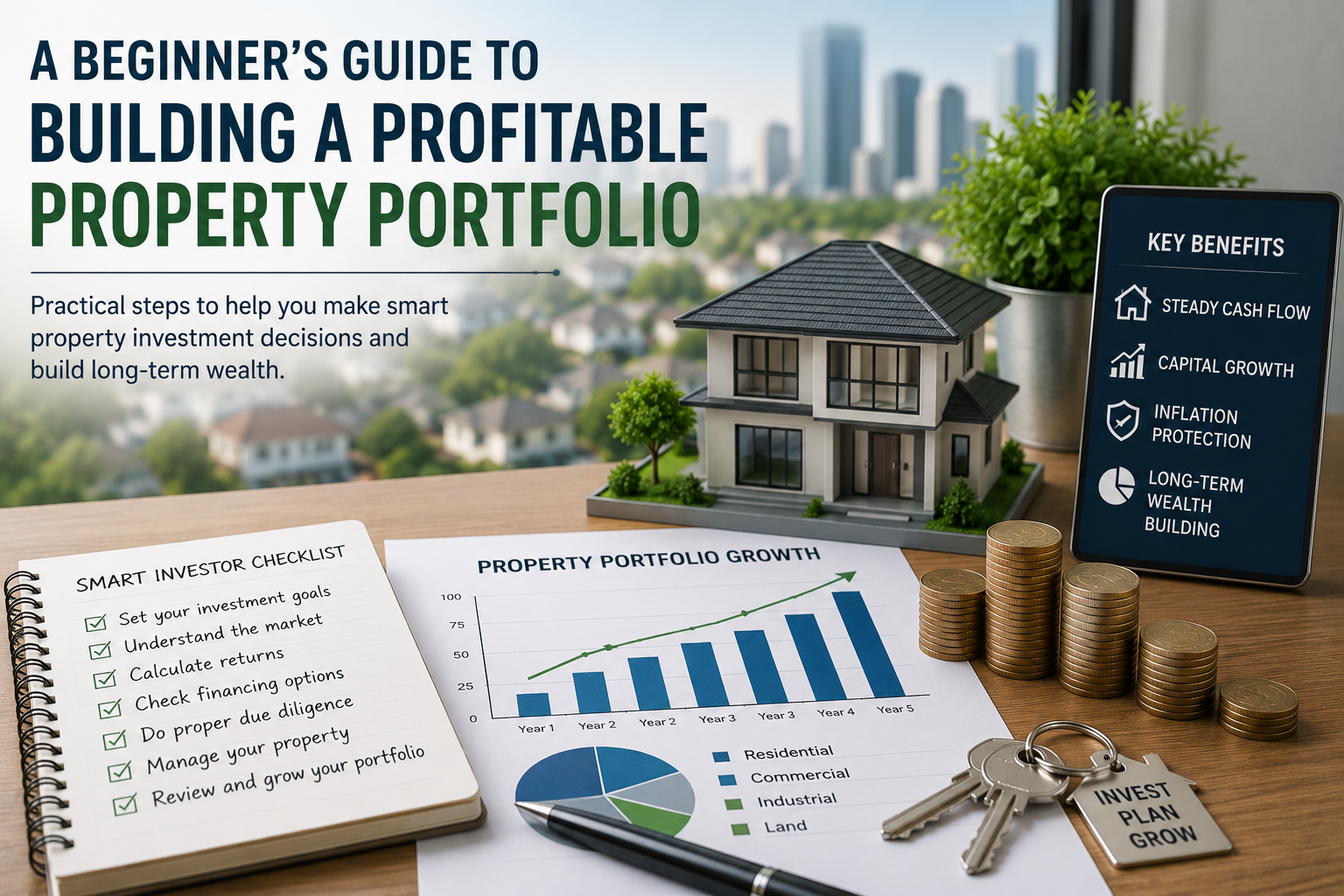
Property investment can be an effective way to build long-term wealth and create additional income. However, building a profitable property portfolio requires more than simply purchasing properties. Investors need careful planning, market research, financial discipline, and effective property management.
For beginners, understanding the fundamentals can make the process easier and help reduce avoidable mistakes.
1. Define Your Property Investment Goals
Before purchasing your first property, determine what you want to achieve.
Your goal might be to:
- Generate rental income
- Build long-term wealth
- Benefit from property appreciation
- Create a retirement asset
- Diversify your investment portfolio
Having clear objectives will help you choose properties that align with your financial plans.
2. Start With a Realistic Budget
Understand how much you can comfortably afford to invest. Consider not only the purchase price but also additional costs such as taxes, legal fees, repairs, maintenance, insurance, management fees, and other expenses.
Avoid stretching your finances simply to acquire a property. A sustainable investment strategy should protect your cash flow.
3. Research the Property Market
Location can have a significant impact on property performance. Research areas with factors such as population growth, infrastructure development, employment opportunities, accessibility, schools, commercial activity, and demand for housing.
Don’t make a purchase based solely on an attractive property. Consider the wider market and the property’s potential over time.
4. Choose the Right Type of Property
There are different types of property investments, including residential, commercial, industrial, and mixed-use properties.
As a beginner, consider starting with a property type you understand well. Evaluate factors such as demand, rental potential, maintenance requirements, and the level of capital required.
5. Calculate the Potential Return
Before purchasing a property, estimate the potential income and expenses.
Consider:
- Expected rental income
- Property management costs
- Maintenance expenses
- Financing costs
- Taxes and other charges
- Potential vacancy periods
- Expected property appreciation
A property that looks affordable may not necessarily be profitable once all costs are considered.
6. Carry Out Proper Due Diligence
Never rush into a property purchase. Verify important information about the property before committing your funds.
This may include checking ownership documentation, property condition, location, planning requirements, outstanding obligations, and other relevant legal matters.
Where necessary, work with qualified property, financial, and legal professionals.
7. Start Small and Build Gradually
You do not need to own many properties to build a successful portfolio. Starting with one well-researched investment can allow you to learn how the property market works.
As your experience, income, and investment capacity increase, you can gradually consider adding more properties.
8. Prioritize Effective Property Management
Owning a property is only one part of property investment. Proper management can have a significant impact on your returns.
Good property management includes:
- Finding suitable tenants
- Collecting rent
- Maintaining the property
- Responding to tenant concerns
- Conducting inspections
- Managing repairs
- Keeping accurate records
Professional property management can be particularly useful for investors who own multiple properties or do not have the time to manage them personally.
9. Diversify Your Portfolio Carefully
As your portfolio grows, consider whether diversification can reduce your exposure to a single market or property type.
For example, an investor may eventually consider properties in different locations or sectors. However, diversification should be based on careful research rather than purchasing properties simply for the sake of having more assets.
10. Review Your Portfolio Regularly
The property market changes over time. Review your portfolio periodically to determine whether your properties are still meeting your investment objectives.
Look at rental performance, expenses, property values, vacancies, maintenance requirements, and market conditions.
Regular reviews can help you identify opportunities to improve performance or make strategic changes.
Common Mistakes Beginners Should Avoid
New property investors can sometimes make decisions based on emotion rather than research. Some common mistakes include:
- Buying without researching the location
- Underestimating maintenance costs
- Ignoring legal and ownership documentation
- Overestimating rental income
- Taking on excessive debt
- Failing to plan for vacancies
- Neglecting property maintenance
- Expanding the portfolio too quickly
Taking time to evaluate each investment can help reduce these risks.
Conclusion
Building a profitable property portfolio is a long-term process. It requires clear goals, careful financial planning, market research, due diligence, and effective property management.
Beginners should focus on making quality investment decisions rather than trying to acquire as many properties as possible. A well-researched property can provide a stronger foundation for future portfolio growth.
At Silverstone Multinational Limited, we understand the importance of strategic property investment and effective property management. With the right planning and professional guidance, investors can make informed decisions and work toward building a sustainable property portfolio.
Ready to explore property investment opportunities? Contact Silverstone Multinational Limited to learn more about our property and business services.