
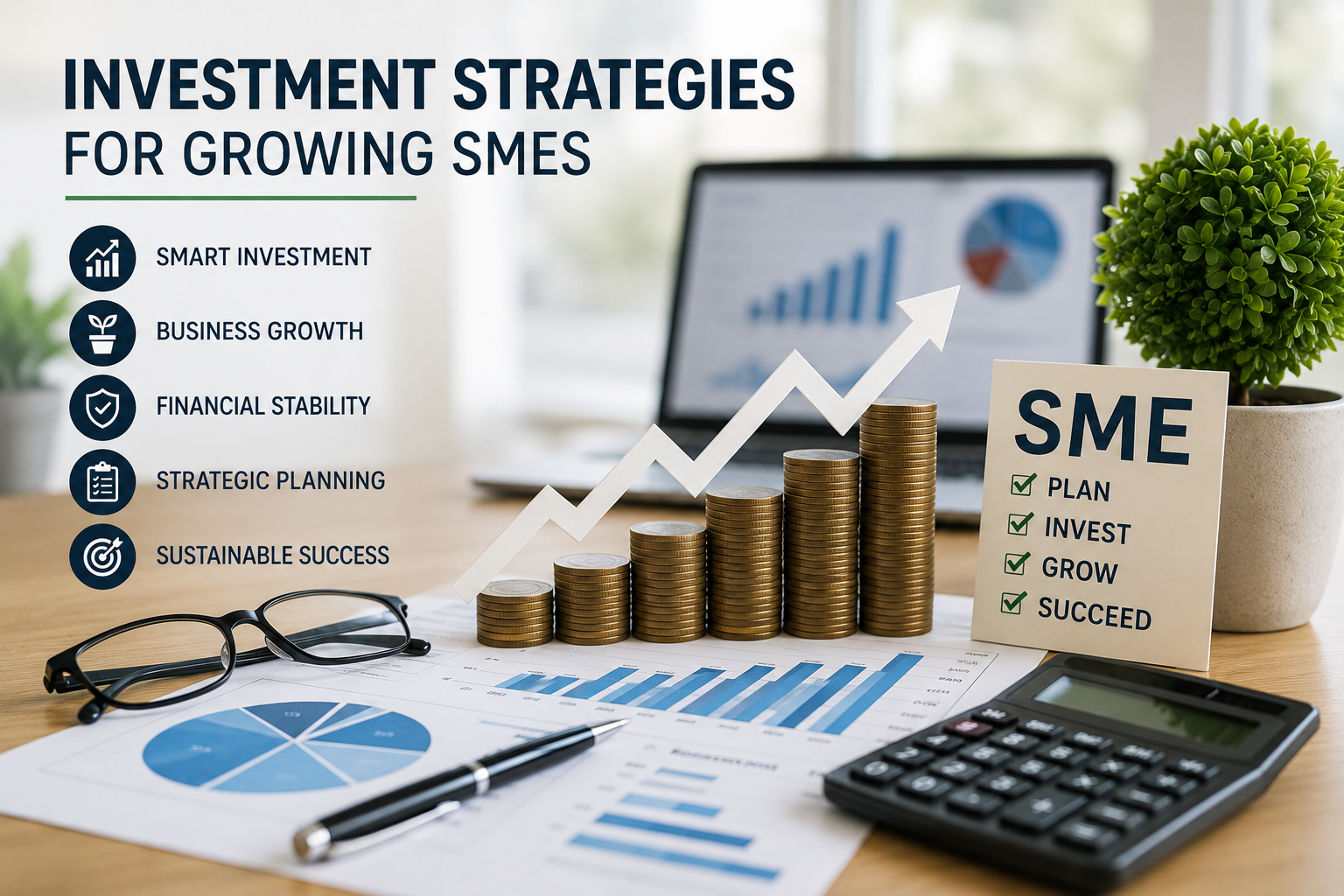
Small and medium-sized enterprises (SMEs) are an important part of the business landscape. For an SME to grow successfully, however, having a good product or service is only part of the equation. Businesses also need access to capital and a clear investment strategy.
Making the right investments can help an SME increase productivity, reach new customers, improve operations, and create new sources of revenue. At the same time, poor investment decisions can place unnecessary pressure on a company’s finances.
Here are 10 practical investment strategies that can help growing SMEs make better investment decisions.
1. Invest in Your Core Business
Before looking for outside opportunities, consider strengthening the business you already have.
Investing in better equipment, improved services, staff development, inventory, or operational systems can help your company serve customers more effectively and increase its capacity for growth.
2. Invest in Technology
Technology can improve efficiency and reduce unnecessary operational costs. SMEs can consider investing in accounting software, customer management systems, digital marketing tools, communication platforms, cybersecurity, and other solutions relevant to their operations.
The best technology investment is one that solves a real business problem and provides measurable value.
3. Develop Your Employees
Your employees are one of your company’s most valuable assets. Investing in training and professional development can improve productivity, customer service, leadership, and innovation.
A skilled team can also help your business adapt as it grows.
4. Invest in Marketing and Brand Development
A strong product or service still needs effective marketing. Consider investing in a professional website, quality content, digital marketing, customer research, and brand development.
Effective marketing can increase visibility, attract potential customers, and strengthen your position in the market.
5. Diversify Your Revenue Streams
Depending on your business model, developing additional sources of revenue can create greater financial flexibility.
An SME could consider complementary products, additional services, new customer segments, partnerships, or expansion into related markets. However, diversification should be carefully researched before capital is committed.
6. Consider Strategic Partnerships
Not every investment needs to involve purchasing physical assets. Strategic partnerships can also create significant business value.
Working with the right suppliers, service providers, investors, or complementary businesses can provide access to expertise, customers, technology, and new markets.
7. Consider Property and Other Long-Term Assets
For some SMEs, investing in property or other long-term assets may support business expansion and wealth creation.
However, these investments require careful evaluation. Consider factors such as location, cost, potential returns, maintenance expenses, liquidity, and the overall financial position of the business before proceeding.
8. Maintain an Emergency Reserve
Growth should not come at the expense of financial stability. Before committing significant funds to investments, SMEs should consider maintaining adequate cash reserves for unexpected expenses and changes in business conditions.
Having sufficient working capital can help a company remain operational while pursuing long-term opportunities.
9. Conduct Proper Due Diligence
Never invest based solely on promises of high returns. Research an opportunity thoroughly before committing business funds.
Review the financial information, ownership structure, contracts, market conditions, legal requirements, potential risks, and expected returns. Where necessary, seek advice from qualified professionals.
10. Measure Investment Performance
Investment decisions should be reviewed regularly. Establish clear objectives and determine how you will measure whether an investment is delivering the expected results.
Ask questions such as:
- Is the investment generating the expected return?
- Has it improved business performance?
- What risks have emerged?
- Is the investment still aligned with the company’s goals?
- Should the business continue, adjust, or reconsider the investment?
Regular reviews can help business owners make better decisions over time.
Conclusion
Investment can be an important driver of SME growth, but successful investing requires planning, research, financial discipline, and risk management. SMEs should focus on investments that support their business objectives rather than making decisions based solely on the possibility of quick profits.
Whether the goal is to improve technology, develop employees, expand into new markets, strengthen the brand, or invest in long-term assets, every investment should have a clear purpose.
At Silverstone Multinational Limited, we believe that informed investment decisions can create stronger businesses and sustainable opportunities. With the right strategy and professional guidance, SMEs can make better use of their resources and build a stronger foundation for long-term growth.
Looking for business and investment opportunities? Contact Silverstone Multinational Limited to explore how strategic planning can support your business goals.